Thursday, March 17, 2005

Scale of the Day: E Flat Octotonic-2 (1 + 1)


The E Flat Octotonic-2 (1 + 1) Scale as you would find it on any conventionally tuned equal tempered instrument. Posted by Hello

Wednesday, March 16, 2005

KomunGuitar


Jin Hi Kim: KomunGuitar. Posted by Hello

Women's History Month
at HurdAudio progresses forward today with an active ear tuned toward KomunGuitar, a series of improvised duets and solos featuring Jin Hi Kim recorded between 1991 - 1993. Kim plays the Komungo, which is a movable fret string instrument that dates back to 4th century Korea.

"Point" is a duet with Elliott Sharp on electric double-neck guitar bass and saxophone. Sharp opens this improvisation with sustained tones that slide around the plucked material on the Komungo. After this texture runs its course Sharp begins to explore some similar meandering lines on a soprano saxophone. This piece progresses with a calm intensity as these two performers seem to grow closer to one another in timbre and sonic gesture. Kim plays both acoustic and electric Komungo on this track and the electric blends well with Sharp's aggressive sonic language.

"Company" is a duet with Derek Bailey on acoustic guitar. Bailey opens this improvisation with some spare notes and one violent strum before Kim answers in kind on the komungo. There's a wide variety of plucked string timbre and density of material in this improvisation. Each performer seems to feed on the other's intensity level as things pick up from those spare, cursory first notes.

"Vongary Meets Big Foot" is a duet with Henry Kaiser on electric guitar. The opening texture is a beautiful juxtaposition of processed electric guitar tones with low to mid range gestures on the komungo. Eventually these two performers work their way to higher registers on their respective instruments. Kim's playing is exceptional on this track while Kaiser's contribution seems to recede into a flat, non-responsive realm.

"Naby" is a solo for komungo. This piece makes me wonder why acoustic guitars don't have movable frets. There's so much flexibility, nuance and range on this instrument. The microtonal inflections add so much to the melodic contour and strummed chords.

"Howdy Partner" is a duet with Eugene Chadbourne on banjo. Timbrally, the banjo sounds like a close cousin to the komungo. The responsive interaction between these two players is fantastic as they teeter into not-quite bluegrass territory of rapidly executed plucked passages that paint unfamiliar harmonies.

"Yellow Seed" is a komungo solo. It starts slow, with just a couple of notes that are reiterated before adding a scraping sound. The melody unfolds with a few more notes added each time before being set free to explore phrases ranging from one to a handfull of notes and gestures. Eventually this continuity-rich building gives way to greater and greater freedom of content. Strummed chords are added as are some brief moments of rolling, pulsating lines.

"Gut Morgen" is a duet with Hans Reichel on electric guitar. Reichel sets up a texture of rapid muted tones against which Kim strums and develops a matching hue. These two performers respond well to one another as they slow things down and open up the prevailing texture while remaining focused within a fairly narrow frequency range. The aural focus drifts naturally between these two instruments.

"Slow View Picnic" is a duet with David First on electric guitar. Here Kim plays the electric Komungo throughout as each performer seems to be emulating the sound of the other to the point where it's sometimes hard to distinguish between these instruments.

Each of these pieces sounds like an excerpt as the larger arc of a live improvised experience feels conspicuously absent. Even so, it's a real pleasure and a revelation to hear this virtuoso on this unfamiliar instrument paired up with so many different master guitar improvisers.

Scale of the Day: D Chromatic


The D Chromatic Scale as you would find it on any conventionally tuned equal tempered instrument. Posted by Hello

Deep Listening


Pauline Oliveros: Deep Listening. Posted by Hello

Women's History Month continues at HurdAudio with a deep listen to Pauline Oliveros' 1988 work with Stuart Dempster and Panaiotis recorded inside an empty cistern in Washington state that once held two million gallons of water. The compositions on Deep Listening for accordion, voice, conch shell, metal pieces, trombone, didjeridu, garden hose, whistling and metal pipes explore the 45-second reverb time found within this incredible space.

"Lear" is, in my mind, the most astonishing Pauline Oliveros composition/experience I've ever heard. For nearly half an hour this fantastic drone texture unfolds as these long, sustained tones fold back in on themselves. One can feel the awe of this enormous space as sound waves reflect into a rich, resonant sonic bath. You can almost trace the trajectory of a single trombone note as it travels and transforms into a space-filling entity. Each instrument's utterance seems to grow into something large before one's ears. Experiencing "Lear" is like soaking in the amplification of physical sound properties.

"Suiren" opens with a vocal tone accompanied by a mysterious high pitch (probably originating from a whistled tone). New tones and sound events are added slowly and carefully to keep the overall sound from growing too quickly. Unexpected interactions between events initiated almost 45-seconds apart illuminate some surprising harmonic qualities. Sometimes these sound like a slowed down version of Tuvan throat singing as different overtones sweep in and out of focus. The image of Pauline Oliveros gently singing into a vast abyss forms in my imagination.

"Ione" begins with a low trombone tone and an even lower accordion tone that soon follows it into this other-worldly environment. As each uttered sonic event takes on a long lifespan notes are carefully selected and sparingly offered. Melodic lines are rarely more than three notes and even those are given plenty of room to roll around for a few minutes. Listening is equally stretched and spaced out.

"Nike" explores unpitched, percussive events within this space. Plosives transform into a wind texture as an enharmonic white noise drone begins to form like a haze. Singing tones eventually introduce harmony into the fog. Then some loud trombone utterances all but burn off the fog as clanging metal pipes maintain overall compositional continuity within this texture. As the loud tones fade out the sound of scraping metal on metal are accompanied by short whistled lines. The blasting trombone texture then returns to build up the sound for the long reverb tail that forms the coda of this composition.

Deep Listening is an incredible listening experience. The rich textures invite one to hear and experience some fundamental properties of sound. It's a set of improvisations/compositions that draws my ears into a primal, active listening state and suggests new ways to listen to and experience other musics.

Tuesday, March 15, 2005

Scale of the Day: E Flat Lydian no 5


The E Flat Lydian no 5 Scale as you would find it on any conventionally tuned equal tempered instrument. Posted by Hello

Monday, March 14, 2005

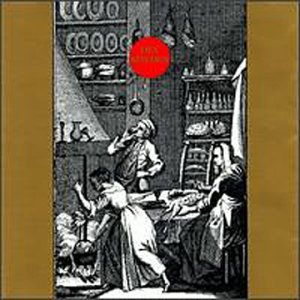
Hex Kitchen


Ikue Mori: Hex Kitchen. Posted by Hello

We're in the thick of Women's History Month now at HurdAudio. Tonight I turn my attention to Ikue Mori's Hex Kitchen from 1995.

This is a challenging listen, but thoroughly rewarding. Ikue Mori plays the drum machine and digital sampler (and occasionally sings) on all tracks while some of the finest improvisers of the downtown New York scene sit in on several tracks.

"Slush" kicks off this listening experience with a solo for drum machine and sampler. Heavily processed loops of differing lengths are presented sequentially with smooth transitions between them. Some of the loops slide into a soupy, sloshy mix while others leave the sampled percussion instruments exposed. Dance friendly rhythms are quickly subverted by subtractive/additive processes.

"Woke Up Aghast" adds David Watson on bagpipe and Hideki Kato on bass. The opening timbre sounds like bagpipes and vacuum cleaners. Mori then begins singing in Japanese as a groove emerges from the sound. Like "Slush," grooves are quickly subverted into a soupy sonic texture. The bass holds things down as the bagpipes emerge as a dominant timbre. As rich and varied as this sonic texture is this piece retains an element of whimsy.

"Angler Fish" features Catherine Jauniaux on vocals, Zeena Parkins on electric harp, keyboard and accordion and John Zorn on clarinet. Mori opens up the sonic density on this piece and allows the guest improvisers to paint their own colors. Jauniaux is well mixed into the larger sound with her extended, wordless vocal technique. This is a strange and beautiful sound.

"Shiver" finds Mori playing with Catherine Jauniaux on vocals, Hahn Rowe on guitar and Zeena Parkins on electric Harp. The drum machine sounds percolate on the periphery as Mori sings some lines in Japanese and Jauniaux answers with wordless vocal sounds. There's a particularly nice texture of screaming guitar with faux operatic singing.

"Recipe" is a solo for multiple drum machines. The familiar and cliched sound of the TR-808 "cowbell" sample seems to pop into the frame periodically (often radically pitch shifted) in this pointilistic study of drum machine timbres. It's actually refreshing to hear these familiar sounds in a decidedly non-dance genre. I enjoy the silent spaces between these truncated sounds.

"Loops" is performed with Zeena Parkins on electric harp and Hideki Kato on bass. The bass lines pitted against the odd looping samples are incredibly satisfying. They would seem too abbreviated if not for the fact that there's no textural stasis on this entire disc.

"Kiss of Fire" is credited as a "traditional arrangement" and features Catherine Jauniaux on voice and Hahn Rowe on bass and violin. This is a song realized in Ikue Mori's sonic sensibility. Rowe maintains a steady bass line as the drum machine sounds avoid anything resembling a steady beat while Jauniaux delivers an english text. One can imagine this being the sound of a bar band filtered through the mind of an incredibly drunk/stoned patron.

"Eight Million Ways To Die" features Hahn Rowe on violin and Zeena Parkins on accordion. The aggressive, breathy attack of the accordion seems to trigger waves of electronic avalanches of processed sound from Mori's electronics. The violin sounds fragile against this backdrop with its thin, breath-like bow strokes. Lots of aggressive energy in this piece.

"Clapper" is a work for solo drum machines and sampler. Here the drum samples seem more exposed as the sound focuses in on lightly processed claves, claps, cowbells, digeridoos and toy pianos. There's a strong pulse in this piece even as loops are fleeting.

"Dau Miu" features Jim Staley on trombone. Here the trombone seems to be dueling against a thick texture of noise and Staley is clearly up to the challenge.

"Hive" completes this listening experience with Zeena Parkins on electric harp and David Watson on guitar. Much of the initial texture is a buzz made up of what my ear detects as a highly processed collection of TR-808 cowbell samples. The electric guitar adds gravity to the buzzing sound and seems to transform it, or at least push it toward a series of transitions. Parkins and Watson soon develop a buzz in a lower register from Mori's textures. Then the whole sound seems to morph into a collective sound that quickly transitions and gains intensity.

This is thick, noisy, ugly, beautiful, punishing and sublime music. I'm always amazed at how much detail I can pick out and how pleasant this disc is when I can focus on the music. There's a vibrant, urban intensity to this sound that is irresistible.
