Showing posts with label Marshall Allen. Show all posts

Saturday, May 22, 2010

HurdAudio Rotation: Of Baroque and Free Jazz

Johann Sebastian Bach: Bach Edition [disc II-2]. 1999. Brilliant Classics: 93102/25.

Leon Berben: harpsichord/Cembalo

The Well-Tempered Clavier, Book I BWV 846-870

Prelude & Fugue No. 13 in F sharp major
Prelude & Fugue No. 14 in F sharp minor
Prelude & Fugue No. 15 in G major
Prelude & Fugue No. 16 in G minor
Prelude & Fugue No. 17 in A flat major
Prelude & Fugue No. 18 in G shar
p minor
Prelude & Fugue No. 19 in A major
Prelude & Fugue No. 20 in A minor
Prelude & Fugue No. 21 in B flat major
Prelude & Fugue No. 22 in B flat mino
r
Prelude & Fugue No. 23 in B major
Prelude & Fugue No. 24 in B minor

Bach's grasp of harmonic centers is completely at the focal point of these works for solo keyboard. The cycle itself makes that abundantly clear as he tackled the creative rigor of fashioning preludes and fugues for each major and minor key. Within the relatively narrow timbral confines of the solo harpsichord these deeply Baroque pieces with their canonic melodies and churning rhythms give off the sense of precision time keeping devices with all their gears in motion. These works have since become a massive head water from which so much music has flowed. It's a good idea to swim in these waters from time to time.

Albert Ayler: Holy Ghost (box set) [disc 8]. 2004. Revenant Records: 213.

Albert Ayler interview with Birger J
orgensen for Afterbeat program - December 1964, Copenhagen, Denmark

Albert Ayler interview with Birger Jorgensen for Afterbeat program - November 11, 1966, Copenhagen, Denmark

Albert Ayler interview with Daniel Caux for France Culture - July 27, 1970, Saint-Paul-de-Vence, France

The verbal side of this uniquely American artist and jazz musician. Putting into words his experience as a creative and sensitive soul puzzled by the hostility and resistance expressed toward what he knew to be his honest expression. One can hear the voice of a man torn between multiple worlds. And for the first time I can appreciate the importance and value of Mary Parks' role in his life. Something that isn't easy to do when listening to New Grass. The need he felt for acceptance within his "own tribe" in America pitted against the acceptance he found throughout Europe along with the responsibility of caring for his own brother in the midst of forging his own creative voice all had a hand in his tragic demise shortly after the interview in France.

The passionate sense of "this is the only way" expressed in the Jorgensen interview with regard to the strain of free jazz he was pioneering speaks volumes about the era he was living through.

Marshall Allen & Lou Grassi: Live at The Guelph Festival. 2007. (Recorded September 8, 2001). Cadence Jazz Records: CJR 1192.

Marshall Allen: alto saxophone, flute
Lou Grassi: drums, percussion

A much appreciated documentation of Marshall Allen's brilliance as a reedsman. Given plenty of space to shine in this duo format with the incredible Lou Grassi propelling things along. Or in Grassi's own words: "...get into that spiritual zone and stay there for an hour or two." These two players - nearly strangers at the time of this performance - find that zone early on in this set. Allen's playing moving seamlessly between introspection and fiery blurs that holds to a sense of open dialogue. His considerable time and energy spent with the Sun Ra Arkestra has somehow managed to eclipse the soloistic attributes that make Marshall Allen such a great jazz treasure. This disc truly is a welcome addition to the rotation.

Sunday, July 12, 2009

HurdAudio Rotation: Sounds from Philadelphia, Lebanon and Saturn

Katt Hernandez/Evan Lipson: Hisswig. 2007. Limited-run mini-disc.

Katt Hernandez: violin
Evan Lipson: bass

A quick hit of the Philadelphia free improvised music scene as two of its most active players lock strings and sonic agility that alternates between aggressive and delicate. The wide, slowly oscillating vibrato of Hernandez's violin drifting within Lipson's orbit before launching toward slight melodic turns toward new vibrato centers. Lipson's fortissimo pizzicato drawing from the foundations of jazz traditions and uncompromising in-the-moment responsiveness.

Mazen Kerbaj: Brt Vrt Zrt Krt. 2005. Al Maslakh: 01.

Mazen Kerbaj: trumpet

There's two sides to this solo trumpet music. There's the "how the hell is he making that sound" side. And once one puzzles out the extremes of coaxing out such extended acoustic source the mind turns toward "how the hell do you record that sound." The virtuosity here is in the maniacal realization of a concrete soundscape without recourse to electronic manipulation. It's profoundly beautiful and fiercely like anything else. It draws the ears well into the inner plumbing of the instrument through the humanity of breath and mind. The geopolitical backdrop of this musician, record producer and cartoonist from Lebanon's somewhat isolated free improvised music scene adds a fascinating dimension that plays pathos against the fiercely independent qualities of this music.

The Sun Ra Arkestra under the direction of Marshall Allen: Points On A Space Age. DVD. Directed by Ephraim Asili. 2009. MVD Visual: MVDV4774.

When does Marshall Allen get his just due? A question forcefully posed by one of the surviving Arkestra members in this video as the final Marshall Allen chapter of the music and wisdom of Sun Ra is being written. "What will happen to the kids that really want to know this music? This guy is in his 80s! Where will they go to learn when all we are left with is mediocrity?" The practitioners of this music serve a dual role as disciples sent out by an absent Ra to prepare human beings for a future that almost defies comprehension within a society dominated by consumer-driven sensibilities. When reduced to spectacle and packaged entertainment along with an inability to discuss music in terms other than units sold (and downloaded) it becomes harder to impart the vision of a band leader who took such creative control over his own narrative. The man from Saturn preparing our souls for journeys that transcend.

Points On A Space Age documents a frustratingly brief slice of the Marshall Allen chapter. It's hard to imagine how a video of any duration could capture the nearly indescribable experience of a live Arkestra show. With just over half an hour this video doesn't attempt to bring that, though there are glimpses of performance footage - including a powerful segment of dance set to "Love in Outer Space" - that is rarely allowed to develop and unfold at its own pace as performances are spliced and manhandled by the editing process. There is also a small sampling of interviews with individual performers that brings out a taste of the mixture of belief and passion in the practice of this music. Segmented by Ra's poetry as read by director Ephraim Asil, there is no shortage of love in this video. But it is short considering the magnitude of the subject. A small document that scatters along multiple trajectories of sound, archival footage and interviews that hints at something much larger.

Monday, June 29, 2009

20/20 Vision in the Left Eye

Go Left Fest @ Yoshi's, San Francisco, CA
Monday, June 22 & Tuesday, June 23, 2009

featuring:
Marshall Allen: alto saxophone, evi, flute
Matthew Shipp: piano
Joe Morris: bass
Sunny Murray: drums
Oluyemi Thomas: reeds
Roswell Rudd: trombone
Myra Melford: piano
Mark Dresser: bass
Ishmael Reed: poetry
Lafayette Harris: piano
Beth Custer: bass clarinet, voice
and several others

The first ever meeting of Marshall Allen, Matthew Shipp and Joe Morris is a solid evening's worth of creative music right there. That trio has more than enough creative muscle to carry on for multiple sets. But at the first ever Go Left Festival over two consecutive night's at San Francisco's Yoshi's they were just the headlining act over a sprawling, multi-set celebration of jazz from the "outside." The Myra Melford/Mark Dresser Duo brings a similar gravity to these music chasing ears. Roswell Rudd could go all night - and clearly wanted to (with no objection from me). And clearly no jazz aficionado's concert attending experience is complete without witnessing the jaw-dropping excellence of Sunny Murray. The air was thick with substance.

In offering the same sequence of sets on both nights, the contrast between free improvisation and set composition became pronounced in interesting ways, with the free material often having more staying power. The exception to this was the short set of quirky compositions and songs by the Beth Custer Ensemble at the onset of both nights. These maintained their charm while the setting of Ishmael Reed's poetry lost all of its charm on the second go around.

The two different manifestations of Sunny Murray's Positive Knowledge was a revelation. Performing as a trio of reeds, voice and drums on the first night the middle section of their set-long performance transformed into a stunning all-percussion experience as each performer played gongs of different sizes over Murray's restless free-form improvisation on the kit. The second night was a duo of Murray and Oluyemi Thomas that explored a different sound altogether. The outspoken and irreverent Murray could easily become my new obsession.

In any other setting, the Myra Melford/Mark Dresser duo would be the highlight of the evening and festival. Dresser's extended techniques with his uniquely amplified acoustic bass have continued to expand as the pair played through Melford's Trio M compositions, offering fresh angles on each piece.

Matthew Shipp is an unbelievable force on the piano and an inspired collaborator with Marshall Allen's aggressive energies. With Joe Morris expertly holding down the bass layer, Shipp worked some of the most thundering accents I've ever heard from the ivories while Marshall Allen launched into his hyper-space sound worlds. Beth Custer's stage banter about "legends in the dressing room" playing out on stage and into this climactic set.

The range of talent on display ran so deep that nearly every set felt short-changed. Roswell Rudd in particular could have used more hours despite the Vision Festival-esque waves of exhaustion. Should there be second, third (and more) installments of Go Left in the future I hope there will be a shift toward spreading this music over more nights with longer sets focused on fewere artists - and no repeating of sets on consecutive nights. Give the ears a chance to sink deeper into the artistry and explore more combinations of performers (the addition of Sunny Murray in the Roswell Rudd set on the second night was positively inspired (and positively knowledgeable)).

Saturday, February 21, 2009

Chromatic Scars Along the Universe

Chromatic Mysteries @ The Windup Space, Baltimore, MD
Thursday, February 19, 2009

Marshall Allen: alto saxohpone, evi
Elliott Levin: tenor saxophone, curved soprano saxophone, flute, poetry
Michael Gibbons: electric guitar
Ed Ricart: electric guitar, processing (and lots of it)
Scott Verrastro: drums, percussion

One gets the feeling that Marshall Allen simply taps into some cosmic force, then channels its radioactive energy into something mere mortals might perceive. Over the course of two long, single movement sets the Chromatic Mysteries charted a course for sonic territory unbounded by gravitational forces. Armed with passports from Jupiter and Philadelphia, this quintet managed to steer well beyond mere spaced-out jam session and into a focused, free improvisation of blistering and relentless outward expansion. This was the sound of improvisation when it locks onto something tangible without becoming bounded. And that is a beautiful thing.

Marshall Allen and Elliott Levin worked as the front men in this textural odyssey. Allen bringing his characteristic laser-like stare and sweeping alto lines along with his square-wave infused EVI playing. Levin proved to be no stranger to this territory as he brought his own aggressive energy - particularly with his "barely controlled" explosions on the curved soprano saxophone - and occasional poetry to bear upon the sound.

Working behind these fire breathing reeds men was the remarkable two-guitar and drums rhythm section that transitioned seamlessly between ostinato progressions and free form textures boiling over with noise and grit. Scott Verrasto moved between a table filled with percussive materials and drum kit - feeling his way into and out of grooves as the tide of the music rose and fell. Late in the first set he circled around behind the audience with a hand held gong that tastefully added a spatial component to the relentlessly mind expanding sound flooding the room.

Experiencing the Chromatic Mysteries live and up close is an exhilarating and exhausting ride. Few performances take this sense of adventure - and good taste - to such an extreme. Chromatic Mysteries plants many, many seeds of possibility along their route as one of the most mind-blowing live bands I've seen in some time.

Tuesday, September 02, 2008

El is a Sound of Nilssen-Love

Frode Gjerstad: clarinet, bass clarinet, alto saxophone
Marshall Allen: flute, alto saxophone, EVI
Paal Nilssen-Love: drums

Thursday, August 28, 2008 @ Philadelphia Art Alliance, Philadelphia, PA

Philadelphia basks in the aftermath of a super nova. On a pleasantly warm night in late August the once Earthly presence of Sun Ra - and those who were in his orbit - still sends ripples of sound that burn the curious ear. A modest table of CDs and vinyl offerings finds Danny Thompson selling the sound of joy from a time when Ra burned bright. Several records on the table feature personnel lists of mind-blowing dimensions.  Hiroshima in particular begs to be listened to with an unreal lineup of Ra, John Gilmore, Marshall Allen, Archie Shepp, Don Cherry, Lester Bowie, Philly Joe Jones, Richard Davis, Don Moye and Clifford Jarvis. Clearly an artifact of nearly incomprehensible value in the history of creative improvised music. These ears nearly weep that so many from that set have already ascended to the next dimension - still craving one more celestial encounter with one's forebears. Marshall Allen is one such presence still burning strong in a Sun Ra orbit.  A powerful aftershock of that super nova that still lingers in the City of Brotherly Love.

Standing in close proximity to that fire, and the still red-tinged beard of Marshall Allen, was the Norwegian born Frode Gjerstad.  A free improvising reedsman with deep roots and an innate ability to tap into the joy of building a ferocious sound.  The periods of time when the soundscape turned around the dueling collaborations of clarinet and EVI suggested that this pair could easily hold their own as a duo.  

But then Paal Nilssen-Love was hardly an unwelcome intrusion into this mix.  Tastefully selecting his entrances (and well timed moments of restraint) he built a layer that was both subtle and aggressive when it needed to be.  It was easy to understand why Nilssen-Love is favored collaborator with so many creative improvisers.  The drum kit - often enhanced with small gongs upon the membrane drum heads or a chain collapsed upon the tom-tom in a heap - rolled and tumbled in creative support with the spaced-out jams of Allen and Gjerstad.  

A fortuitous meeting of three improvisers willing to put a bite into their sound.  Over the course of one blistering set the Philadelphia Art Alliance was the place.  An otherworldly tradition manifested itself in jagged sonic shades as a reminder of the timeless glow of both past future and present future sounds.  

Monday, May 26, 2008

Two Nights of Marshall Allen

Thee Maximalists @ Orion Sound Studios, Baltimore, MD
Saturday, May 24, 2008

Paul Sears: drums
Keith Macksoud: bass
Dave Newhouse: keyboards, saxophones, flutes, bass clarinet
Marshall Allen: alto saxophone, flute, electric valve instrument
Elliott Levin: saxophones, flute, poetry

-----

The Sun Ra Arkestra under the direction of Marshall Allen @ Sullivan Hall, New York City, New York
Sunday, May 25, 2008

Marshall Allen: alto saxophone, flute, evi
Charles Davis: tenor saxophone, percussion
Art Jenkins: percussion, vocals
Tyrone Hill: trombone
Michael Ray: trumpet, vocals
John Ore: bass
Fred Adams: trumpet
Knoel Scott: alto saxophone, percussion
Vincent Chancey: french horn
Cecil Brooks: trumpet
Danny Ray Thompson: baritone saxophone, flute
Rey Scott: trombone
Dave Davis: trombone, tuba
Luqman Ali: drums
Elson Dos Santos Nascimento: percussion
D. Hotep: guitar
Yahya Abdul-Majid: tenor saxophone, percussion
Bill Davis: bass
Farid Abdul-Bari Barron: keyboard
Wayne Anthony Smith Jr.: drums

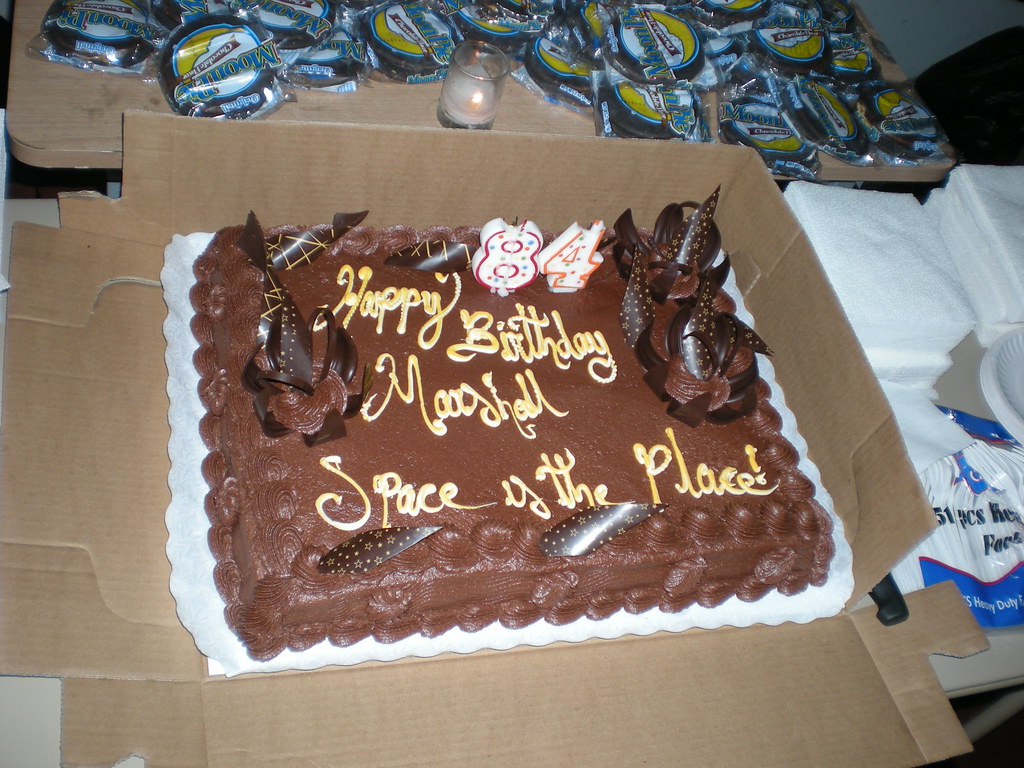
A celebration of the 84th anniversary of Marshall Allen's arrival on Earth.

------

The Sun Ra Arkestra covers an astonishing slice of jazz history. Over the course of two long, spirited (and spiritual) sets at Sullivan Hall, the space age band touched upon several resonant nodes of large ensemble improvisation. Reaching all the way back into the Sun Ra catalogue with a vibrant take on "Dreams Come True" to "Space is the Place" and several wonderful Marshall Allen originals the Arkestra proved not only is it going strong, but continues to be as hip, vital and "out there" as ever. With an ensemble cohesiveness formed from unusually long associations they bring a rare ability to swing everything from standard charts to full-on free improvisation that keeps everything deliciously unpredictable and enthralling. The Arkestra also brings a playful, irreverent energy that overflows with cosmic optimism and an open invitation to bring one's ears and mind to explore a cosmos of theatrics and sound.

One night earlier at Baltimore's Orion Sound Studios it was a completely different sound marked by Marshall Allen's improvisational voice and searing sound. As a collaborator with Thee Maximalists, Allen was backed by the decidedly progressive rock leaning rhythm section of Paul Sears and Keith Macksoud while co-conspirators Dave Newhouse and Elliott Levin alternated as fellow horn players with keyboard and poetry added to the mix - each weaving their own individual elements into the sound. The textures often carried a heavy groove while the space-age qualities of the electronic valve instrument - a device capable of serious beauty in the hands of Marshall Allen - was completely at home within this sonic environment. The forceful gestures from the alto saxophone on display at both performances was expressively human no matter how many genres were colliding underneath it.

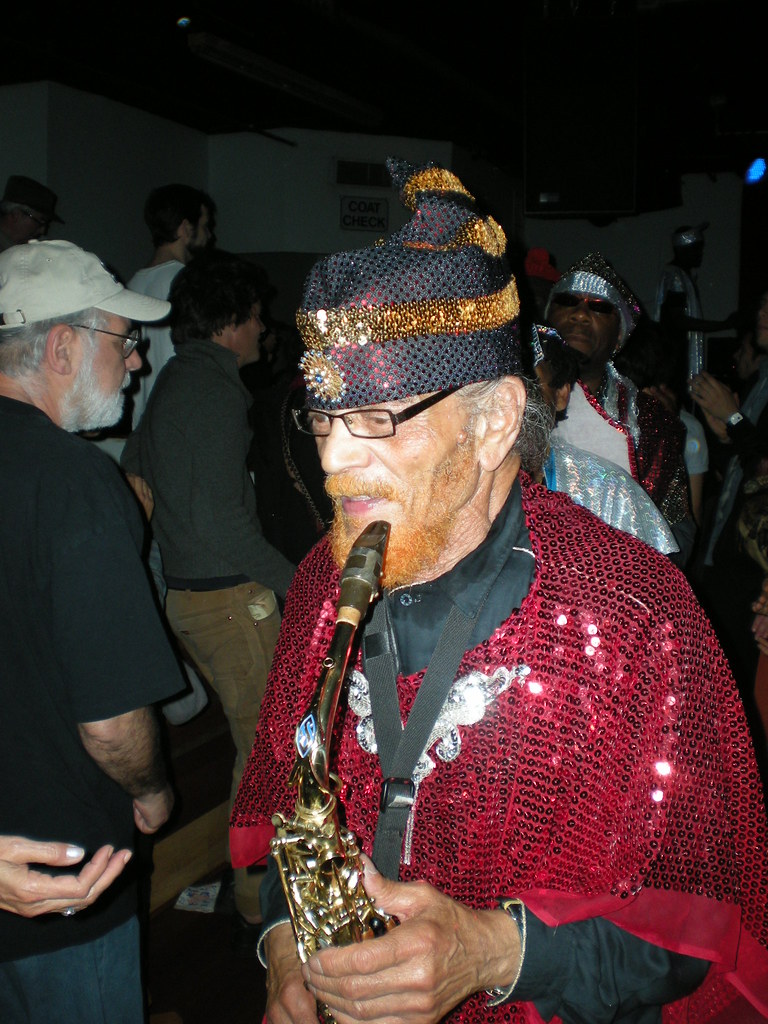
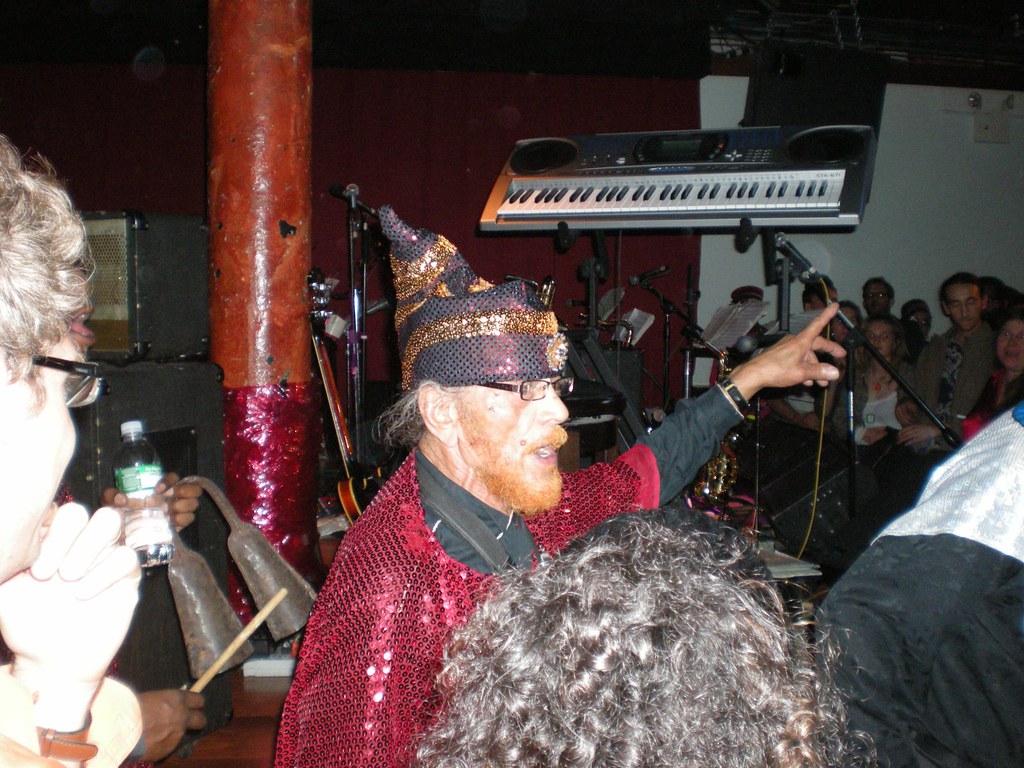
It's no accident that Marshall Allen led the Sun Ra horn section for 40 years before assuming the leadership position of the full Arkestra. The man from Saturn had a knack for adding - and retaining - great talents within the Arkestra. Allen's forceful gaze that sweeps across the audience with searing intensity becomes a conductive focal point when turned upon the players in the Arkestra. The combination of eyes and movement locks the ensemble together and often triggers synchronized gestures from the full battery of players. The sounds drawn out of his instruments burns with enormous creative energy. He is an excellent saxophonist and an improviser with edgy ideas that stand out. The expressions of love, respect, joy and well wishes from his colleagues and audience were genuine and heartfelt. (And the cake was delicious). At 84, his life is a fascinating story of long running creative accomplishments and a sound that deserves to be widely regarded as an important thread of jazz and creative music. His own compositional voice is a masterful take on the traditions and spirit of Sun Ra.

With Thee Maximalists, Marshall Allen proves that there are many paths both to and from Saturn. His activities outside the Arkestra add new insight to his sound as he adapts to different players with startling results. The swirling lines of the electronic valve instrument accompanied by two flutes was one particularly inspired moment within a shifting sea of improvised textures from the Maximalists. Proving that the energies of the cosmos can both rock and swing.

With the Arkestra, he resides at the helm of a beautiful pageantry. The live experience with the costumes, the sounds of joy and players clearly feeding off of the energy of a crowd is a glimpse into a friendlier solar system. The procession of players carrying their sound off the stage marked an adieu in the form of a parade easing toward a gentle return to our home planet. Earth is fortunate to have Marshall Allen among us.

Wednesday, May 07, 2008

Sitting Close to the Sun, Where Weasel Could Eat Your Flesh

Marshall Allen/Weasel Walter Duo @ Philadelphia Art Alliance, Philadelphia, PA
Tuesday, May 6, 2008

Marshall Allen: alto saxophone, flute, electronic valve instrument, keyboard
Weasel Walter: drums, percussion, clarinet mouthpiece, primal yells

"I'm actually 48. They got the numbers backwards." - Marshall Allen.

May 25th marks the anniversary of Marshall Allen's presence on Earth. A tenure stretching back to 1924 that includes 40 years as a member and leader of the venerable reed section of the Sun Ra Arkestra. A long apprenticeship that had Allen at the forefront of the Free Jazz movement where he developed his own voice as a leading figure of both the avant-garde and the ways of Saturn. As the leader of that great Arkestra - succeeding both Sun Ra and John Gilmore - Marshall Allen has sustained a remarkable extra-terrestrial connection to one of the most vibrant, colorful and rich jazz traditions ever known. Each anniversary of this creative force is a cause for celebration and intense performances such as this duo at the Philadelphia Art Alliance proves that the celestial fires continue to burn strong within this great soul.

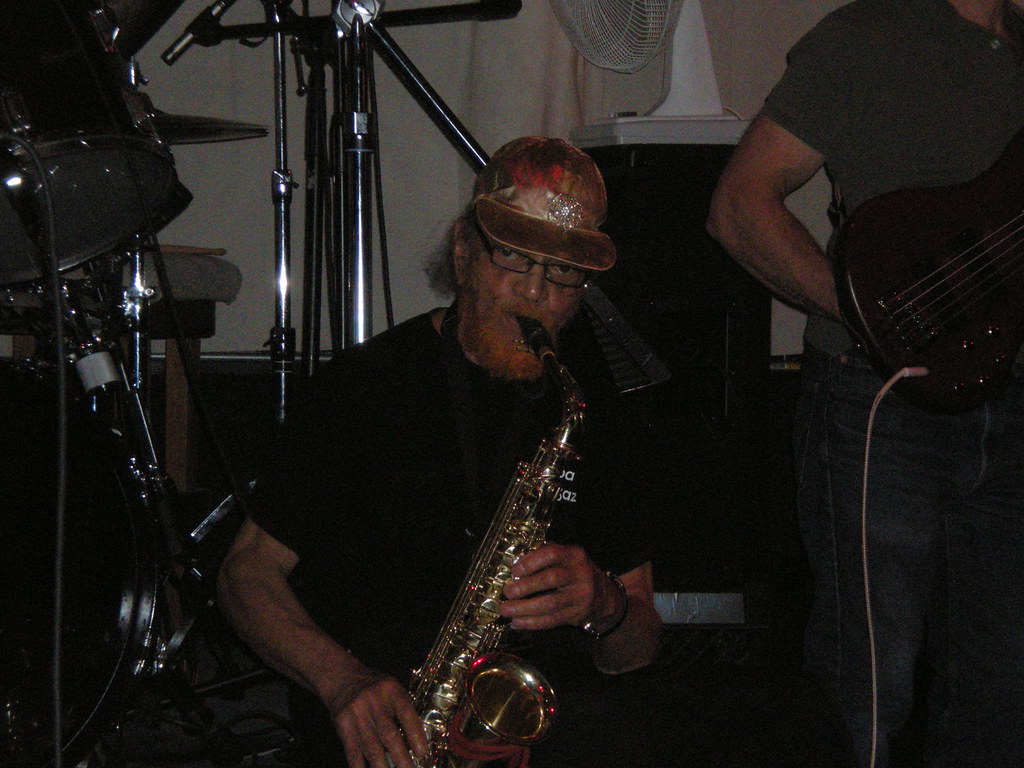
The jazz punk drumming of Weasel Walter added yet another dimension to this sound as his heady brutality achieved an unusual balance of thoughtful introspection and energetic release. With fearless and deliberate double-kick technique combined with a fluid sense of dynamic texture Weasel alternated between instigator and reactor to the sample-and-hold material of Allen's Electronic Valve Instrument and sheets of alto saxophone sound. Marshall Allen proved to be an equal collaborator as he deftly wove his space-age stylings within the fire hose of noise from Weasel and propelled the music to multiple planes of visceral and sonic altitude. This was a kinetic performance that draws few comparisons and delivers exactly the live experience that keeps these ears hungry.

The transformation of the analog wave-forms of the electronic valve instrument into a sonic pallet of wide register and creative expanse in the hands of Marshall Allen was remarkable. In an age of digital precision and pitch-corrected obsession this was a powerful reminder that sound in the service of good ideas trumps all. The layers of delayed sawtooth waves and sweeping portamento drew upon an almost retro-sounding sense of science fiction when the future was viewed with wide-eyed optimism that feels more vibrant and necessary than ever. The jagged, monophonic lines coming from the small keyboard that Marshall Allen played with his knees half bent as he surveyed the audience held a strong echo of the ideas and mannerisms learned from the great Sun Ra as his costume and demeanor neatly channeled the intoxicating abandon and exuberance of so many Arkestra performances. If "El is the Sound of Joy" then Allen is the long tail of that joy filled sound. And at 84, he is a vital connection to a rich jazz tradition that he continues to excel at as a spry, forcefully creative performer. Planet Earth is considerably richer because of him.