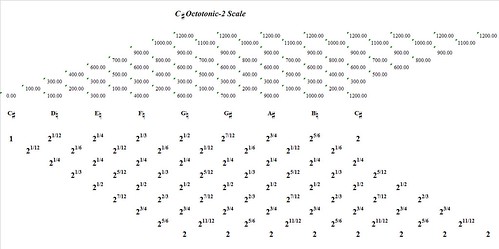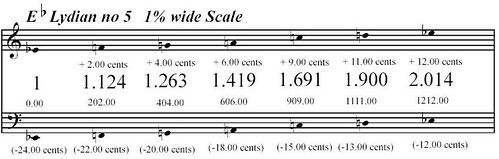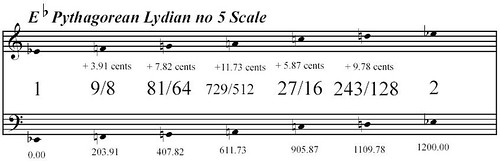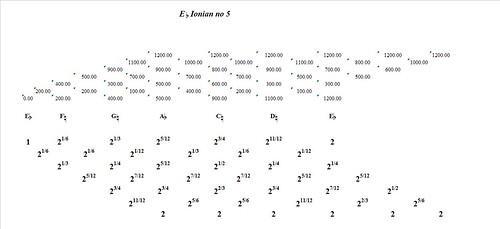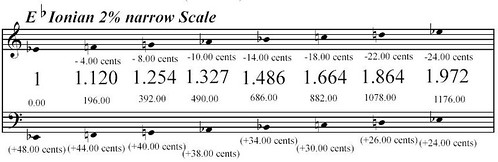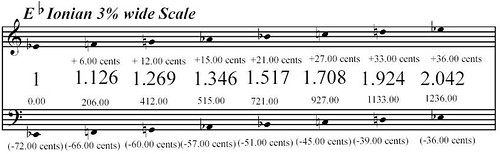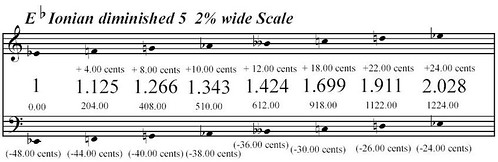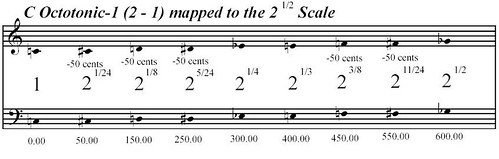
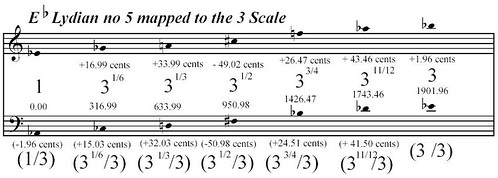
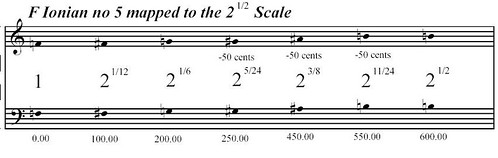
The C Octotonic-1 (2 - 1) mapped to the Square-root-of-2 Scale.

 "Red Shift" (1989) by Lois V. Vierk. Scored for cello, keyboard, percussion and electric guitar. Performed by the Bang on a Can All-stars on Cheating, Lying, Stealing (1996) on the Sony Classical label.
 "Oa Poa Polka" (1988) by Mary Ellen Childs. Scored for solo accordion. This was part of a collection of Polka from the Fringe - a set of 30 pieces commissioned by Guy Klucevsek - recorded on Manhattan Cascade (1992) on the CRI label.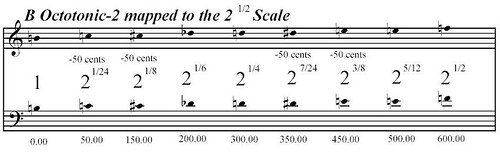
 Women's History Month at HurdAudio continues with a listen to a work for string quartet and a work for string quintet with percussion.
 "Two Bits" (1991) by Allison Cameron. Scored for 4 percussionists, 2 violin, viola, cello and bass. Found on Bang on a Can Live volume 1 from 1992 on the CRI label.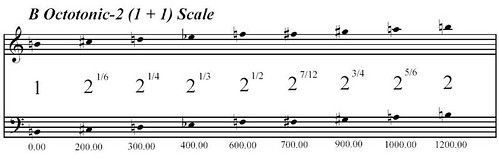
 Women's History Month at HurdAudio takes a close listen to wind trio and a solo violin work.
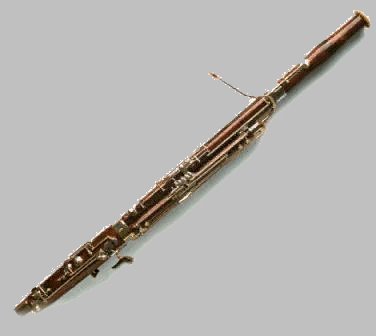
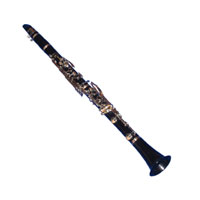 This 9-minute work opens with a lone bassoon note in a moderately high register pulsating irregularly at a moderate tempo. The flute then trills briefly in a low register and the clarinet comes in shortly with a sustained tone, then a trill from that same note before moving back toward a drone. What follows is an interplay between these three instruments as they weave inventive melodic lines.
 The fluidity of this composition is striking. The musical ideas in this work seem to drift effortlessly between highly independent parts and rhythmic unisons that coalesce at various points along the way. The linear, melodic lines take on an organic quality - often hocketing freely between parts - as they unfold with enormous variation even as the work as a whole sustains a healthy degree of harmonic dissonance throughout. The overall balance is impressive as these three instruments contribute equally to the sonic image.
 "Portrait of Malcolm" (1987) by Pauline Oliveros. Performed by Malcolm Goldstein on Sounding the New Violin from 1991 on the What Next? label. This is a solo violin realization of "Portrait of _______" - a graphic score for solo or ensemble.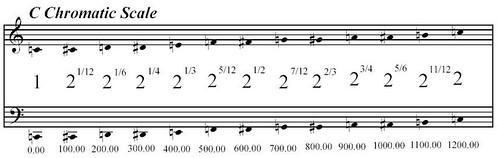
 Women's History Month at HurdAudio takes a spin at a pair of compositions by New Yorkers that work their way inside the unique timbres of two different keyboard instruments.
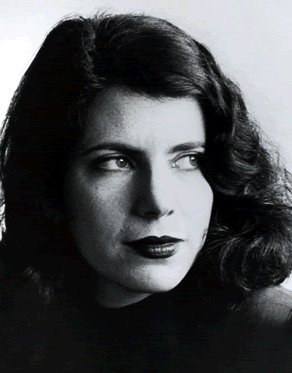 "The Manufacture of Tangled Ivory" (1995) by Annie Gosfield. Scored for digital sampling keyboard, cello, double bass, percussion and electric guitar. Performed by the Bang on a Can All-Stars on Cheating, Lying, Stealing from 1996 on the Sony Classical label.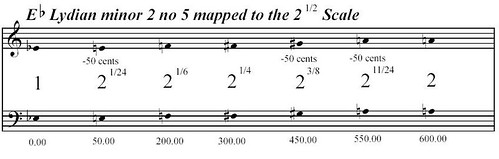
 Women's History Month continues at HurdAudio with attentive ears tuned toward an east coast/left coast pair of compositions.
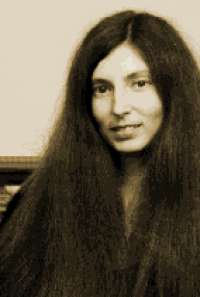 "Airwaves (realities" (1987) by Maggi Payne. An electronic work made up of the "unprocessed" sound of cars passing by and airplanes flying overhead as well as a heavily manipulated sounds of television and radio broadcasts. This work is found on Another Coast (New Works From the West) compilation from 1988 on the Music and Arts label.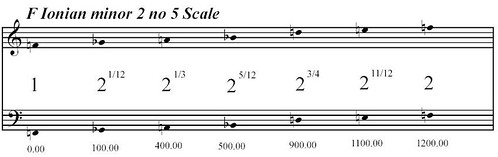
 Women's History Month at HurdAudio continues with a deep listen to two standout compositions.
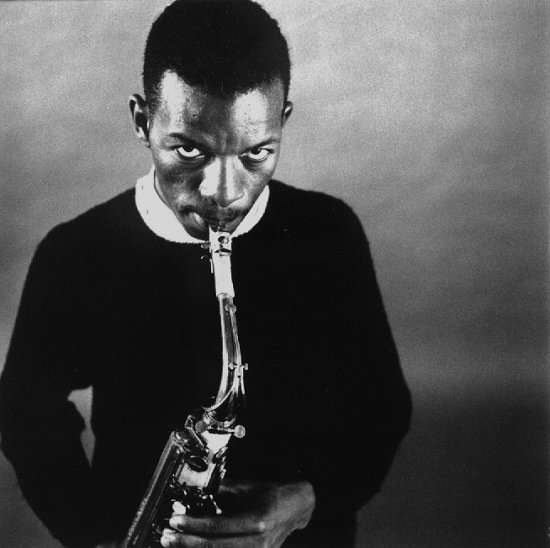 Have a Harmolodic Day! International Ornette Coleman Day comes but once a year.
  The steady truth of Ornette's titles are striking. From the tautological This Is Our Music to the boldly prophetic The Shape of Jazz to Come to the sublime "Music Always" or "I Heard It Over The Radio" to the poignant "Beauty Is A Rare Thing" (even when beauty is free flowing from the tenor in hand it is never "common") to the simply stated Ornette! Even more striking are the qualities that emerge from these compositions in the hands of some great interpreters. Don Byron's take on "Check Up" to open A Fine Line is stunning. Or the deeply satisfying Paul Plimley Trio's take on "I Heard It Over the Radio" from Density of the Lovestruck Demons. The Ginger Baker Trio's take on "Ramblin'" (with Charlie Haden on bass) from Going Back Home is also a stunner. And his most famous composition -- "Lonely Woman" -- has endured numerous interpretations (the melodic line is an obvious attraction on that one). Though nothing I've heard has really equaled the quality of that initial 1959 recording.
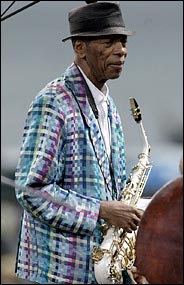 The combination of Ornette Coleman's Harmolodic theory with the fruits of its application - now making up the magnum opus of the Ornette Songbook - pulls together one of the most compelling examples of theory and application of any era. Much of which will be expanded upon by generations of players and composers that pick up the harmolodic torch and apply their own bent.
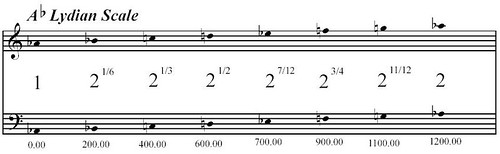
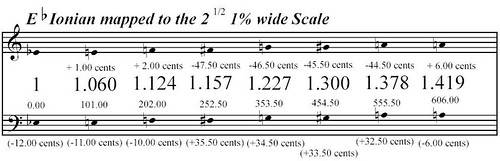
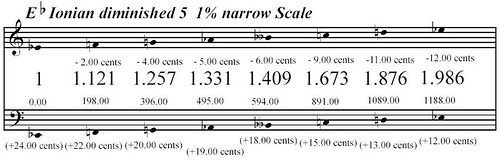
  The linear intervallic content of those melodic lines is a real ear grabber. The sequence of intervals Ornette uses suggests a cohesive approach that unhinges the melody from an underlying tonal scale by combining polytonality with the blues. And the intonation implications of this approach are compelling. Applying a harmolodically inspired freedom toward these melodic lines I am intrigued by the idea of tuning these successive intervals so that allows these pitch-classes to grow increasingly distant from the initial 1/1 "tonic" and spin a course through uncharted harmonic territories. Over time the intonation would drift as successive 7/4 sevenths multiply against 4/3 perfect fourths along side a co-mingling of 9/7 and 5/4 major thirds. An ensemble of players following along this harmonic "journey" could open up an incredibly nuanced texture that would add a new wrinkle to The Shape of Jazz To Come.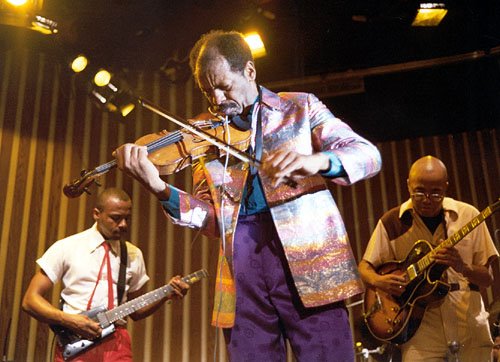
 Women's History Month is in full bloom at HurdAudio. Tonight I have my ears and attention tuned to a pair of chamber pieces for strings that have made a substantial impression both sonically and conceptually.
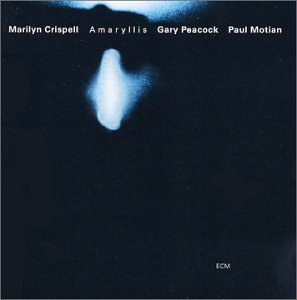 Women's History Month at HurdAudio finds ears tuned to Amaryllis, an understated masterpiece recorded in February of 2000 at the Avatar Studios of New York. As one of the most thrilling improvising pianists of this era, Marilyn Crispell exposes new territory for the piano trio format with some surprisingly restrained and slow tempo compositions with Gary Peacock on bass and Paul Motian on the drums. Crispell has enormous creative range as her ability to explode - as found on previous recordings - held me at the edge of my seat as she brings the same level of intensity to a more serene texture.
 Black History Month at HurdAudio, 2006 - Summary