I find
Happily Ever After by
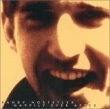
Randy Hostetler in my ears as I periodically approach this outstanding work from time to time to experience this epic text piece that transcends the limitations and frustrations of spoken language to reveal the rich potential of text-sound. This piece uses a great idea realized with talent and an ear for detail.
Happily Ever After is a 43-minute work consisting of manipulated recordings of Randy Hostetler and 64 of his friends and families telling stories. Each story begins with "Once upon a time..." and ends with "... happily ever after." Everything in between is up to the story teller as a loose improvisation in narration. These performances are manipulated largely by temporal and thematic placement and the actual language is never obscured beyond some careful overlaps between storytellers (and even these are panned comfortably within the stereo field so that one can pick out a story line at any moment).
This work accomplishes something extremely rare in text-music compositions. Less than 20 minutes into this work it eliminates my resistance to text-sound and the pervasive consciousness of tangling sound with literal meanings vanishes and a carefully woven texture reveals something beautiful and human. One becomes emerged within the attractive din of a family gathering in a warm home. For a work limited to the sound of recorded voices there's a rich texture that emerges from the range of age, gender and varying degrees of enthusiasm, humor, melancholy, remorse, regret, irony, sarcasm, seriousness and comfort level with being recorded. The piece opens with a brilliant overdub of multiple "Once upon a time" along with another massive wave of "okay, is this thing on?" before opening up into a wide polyphony of human experience. There's a surprising dynamic range that keeps the experience vibrant as one strains to hear a lone, quiet story telling before being swept up in a wave of activity.
What emerges from this texture, and this experience, is a pervasive sense of a meta-story of the multiple components of human mortality. No single story slides into focus. Some episodes slide into the foreground but the overall "story" is more impression than narration. This is an unusual, fantastic work that illuminates an unpretentious vulnerability that works on so many different levels.




 I find Happily Ever After by Randy Hostetler in my ears as I periodically approach this outstanding work from time to time to experience this epic text piece that transcends the limitations and frustrations of spoken language to reveal the rich potential of text-sound. This piece uses a great idea realized with talent and an ear for detail.


